FISS is a member of the Eco-School network, discover our label!
French International Scientific School, home

Independent private school

Discover the FISS School

FISS is an international school offering a bilingual programme in line with the French and British curricula, with a strong focus on learning Arabic. We are proud to promote a stimulating and diverse learning environment, centred on scientific discovery and language learning.

Why FISS

Why choose FISS?

  • A bilingual French and English programmeIn line with the French and British curricula.
  • Arabic as a third languageAlongside French and English, from nursery onwards.
  • From nursery to Year 9From nursery to Year 9, one school.
  • Small classesIn primary, small groups of 20 pupils per class.
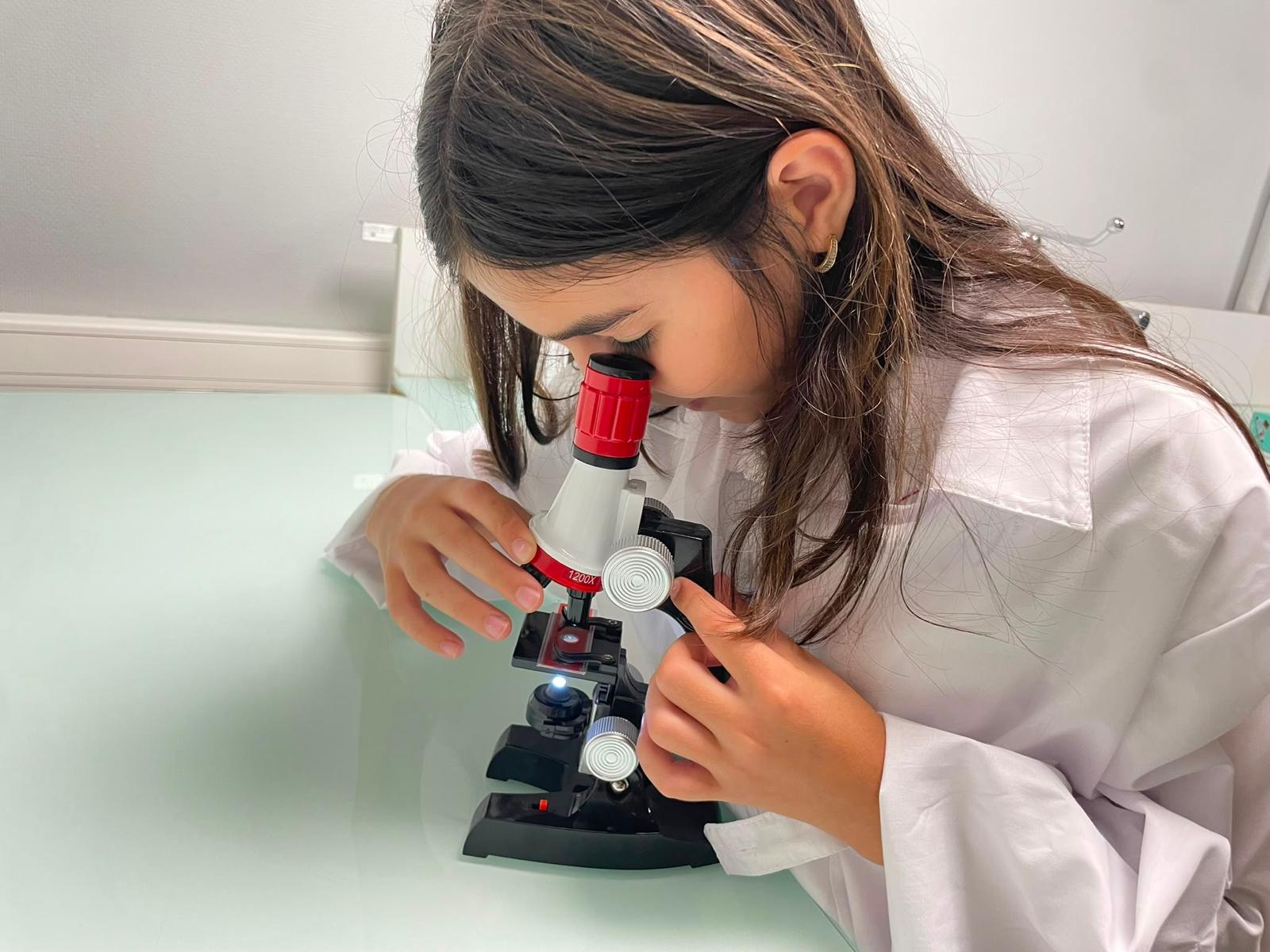
  • Scientific discoveryHands-on, concrete learning methods.
  • Eco-School labelFISS is a member of the Eco-School network.

Our values

Helping our pupils become citizens of the world, open-minded, creative and confident.

  • kindness
  • respect
  • self-confidence
  • open-mindedness
  • loyalty
  • autonomy
  • discipline

Latest news

Stay up to date with the latest news and events at FISS

FISS is a member of the Eco-School network

Discover our label! →

FISS, an international education project

Welcome to the French International Scientific School of Grenoble

This article is a guide to our school, so that everyone can understand our philosophy, our aims and our resources.

Grenoble is a growing city, home to many international companies, with many more expected to settle here.

Moreover, more than ever, families move within France and abroad, which gives them varied school experiences that are a real asset. FISS aims to welcome this diversity of school, cultural and language backgrounds, to make the most of it and help every child flourish, for the benefit of a richer school community.

Two teaching priorities define our school. The promotion of three languages, with a programme in line with the French and British curricula, and the opportunity to learn Arabic as an additional language.

Scientific discovery is the school's second strength, thanks to innovative alternative methods based on hands-on learning and to ongoing training of the teaching staff, to bring science to life at school. FISS is an international scientific school. International education refers to specific educational initiatives that broaden pupils' knowledge of the global community, while strengthening their intercultural skills and their ability to be citizens of the world.

At FISS, we believe this project will nourish children with a rich variety of languages and a multicultural open-mindedness, helping them develop empathy and respect for others.

The school logo reflects the scientific spirit that runs through our programmes. The three rings also stand for the three languages taught at the school, which interconnect and show how science and languages work together to shape enlightened minds in young learners, preparing them to be citizens of the world.

Our spaces are designed to support children's development across all the forms of intelligence described by Howard Gardner in his theory of multiple intelligences. A movement area, an art area, a botanical area, a space for sharing and togetherness... so many spaces where children can move around and take part in immersive language workshops in different ways.

Ongoing training in international education and languages supports the teaching team throughout the year, to ensure a school culture in line with the project. Learn, experiment, succeed.

Aims

Aims

Deliver a bilingual programme in French and English, enriched with a third language, Arabic.

Offer families moving within France and abroad a welcome suited to their needs.

Offer an alternative curriculum open to anyone interested in an enriched language approach and in science teaching based on hands-on, concrete learning.

Who we welcome

For children aged 3 to 16, French speakers or speakers of other languages

A school that combines the benefits of French-speaking and English-speaking education

France is committed to national and international mobility, in a context of dynamic globalisation.

Our school therefore aims to offer a curriculum that values the experiences of children returning from abroad, to welcome children staying in the city for a while, and to meet the expectations of families interested in alternative methods, immersive learning of English and the discovery of a third language.
All nationalities are welcome, for an enriching and fulfilling education in an ideal setting at the foot of the Alps.

Our pupils receive an enriching and stimulating education, following a varied and balanced programme based on the English and French National Curricula, adapted to an international perspective.

In a warm and welcoming atmosphere, everyone is respected as an individual. A special effort is made to respect each pupil's educational and cultural experience.

Developing essential human qualities is at the heart of our educational project, so that our pupils become international citizens.
- kindness
- respect
- self-confidence
- open-mindedness
- loyalty
- autonomy
- discipline

Helping our pupils become citizens of the world, open-minded, creative and confident.

Mission and aspirations

Becoming an enlightened, open-minded citizen of the world

Our vision of education favours teaching suited to the modern world, founded on the principles and values of
- interculturality and mutual understanding
- inclusion
- the child's autonomy
- the scientific spirit and creativity

To shape creative and resourceful pupils, who know their strengths and weaknesses, and who grow and act independently and autonomously, we believe that following the curriculum and developing social values go hand in hand. Individual goals and skills must always be assessed, in order to meet each pupil's personal needs while respecting and affirming all differences of nationality, culture and religion. In keeping with our vision and values, we welcome all pupils. To achieve our goal, we provide an international, relevant and balanced programme that enables pupils to acquire the knowledge, skills and understanding they need to play an active role as international citizens. Our teaching is built around a stimulating and engaging academic programme.

We value the development of self-confidence and encourage children to give their very best.

Curriculum

FISS offers an international education from nursery to Year 9

Teaching is strictly centred on the child and their progress up to Reception, the Foundation Stage.
During this stage, from 2 and a half to 4 years old, the child lives a unique immersive experience, where play and learn is part of daily life. Learning without realising it, developing language, being exposed to many languages, discovering the joy of books and of group life, to spark the joy of learning from the earliest years.

Early Years and Primary

Teaching in English grows over the years. 3 hours a week in Early Years, 4 hours a week in cycle 2, 5 hours a week in cycle 3 and 8 hours a week from cycle 4, in a bilingual perspective.

Teaching in English follows the English National Curriculum and includes subjects such as language skills, literature, science, discovery, sport and art.

French teaching is divided into two groups. French as an additional language, or French as a foreign language (FLE), and French as a mother tongue, which strictly follows the French national curriculum.

After a meeting and welcoming the child, arrangements and placement in the right working group are considered individually, so that each learner is supported in the most personalised way possible. The child's well-being is indeed at the heart of our school's priorities. We see it as a key to success.

Learning methods are designed to adapt to each child's stage of development, and are reviewed every year to stay at the forefront of teaching innovation.

Secondary

During the three years of lower secondary, Years 7, 8 and 9 (5ème, 4ème, 3ème), pupils receive a bilingual education with additional Arabic as a third language, continuing from primary school, with the option of adding a fourth language, Spanish, and following the subjects specific to secondary school, history and geography, science and technology, PE.

Computing is a key tool that the teaching team uses for cross-curricular projects. The English programme follows the English curriculum (English literature, history and geography), while the French programme follows the French curriculum (literature, history, geography, civic education). Science is taught in French or in English depending on the child's language profile and qualification plans, in agreement with the family.

How schooling is organised in an international school

All our programmes comply with the common core of knowledge, skills and culture, in accordance with decree no. 2015-372 of 31 March 2015, by cycle, as detailed in the documents below.

Nursery Foundation Stage

Nursery school

Nursery welcomes children from the age of two and a half.
At FISS, nursery covers the first 3 years of school, Early Years 1, Early Years 2 and Reception.
Early Years children may attend the morning session only, from 8.30 am to 11.30 am.
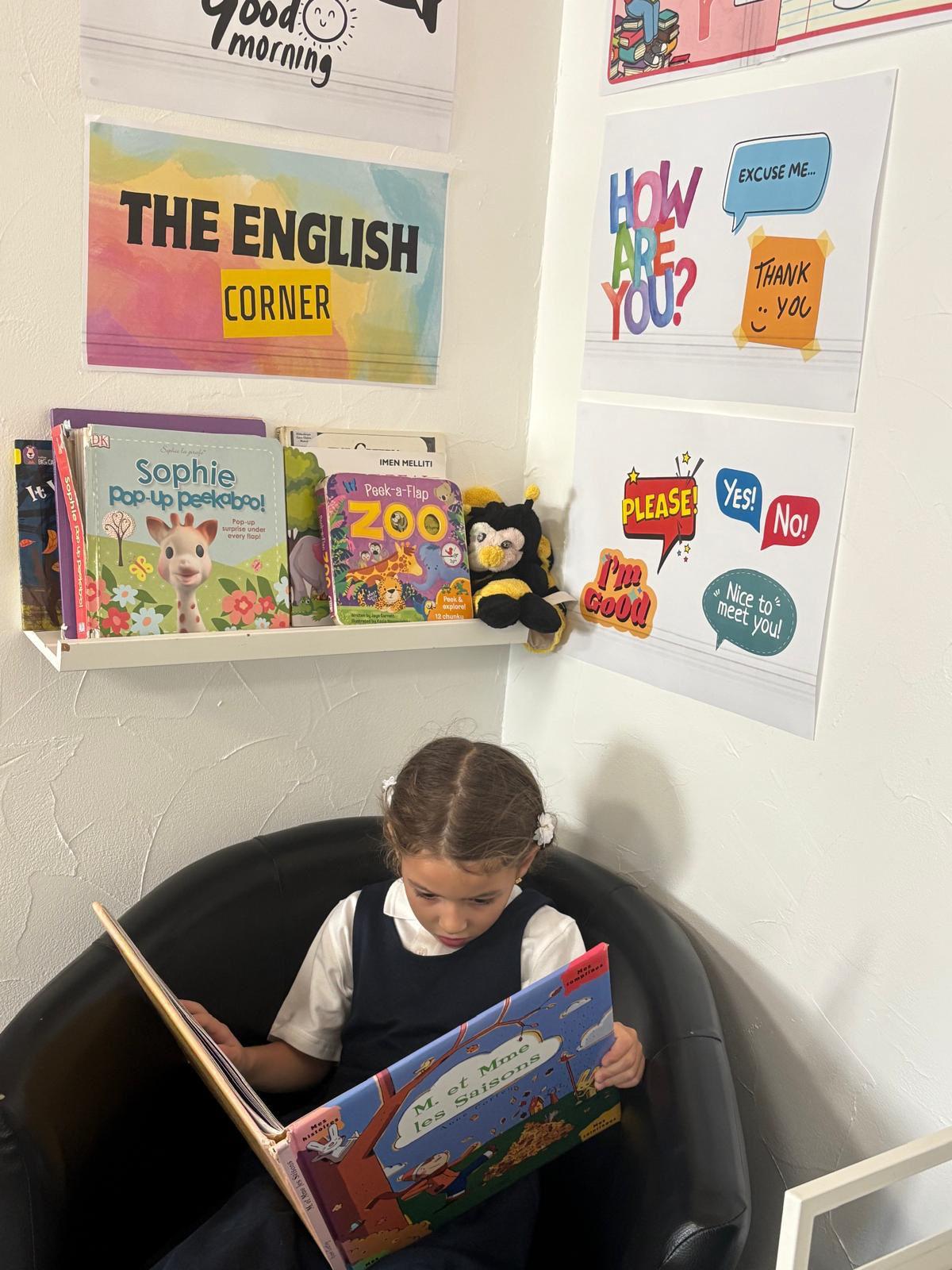
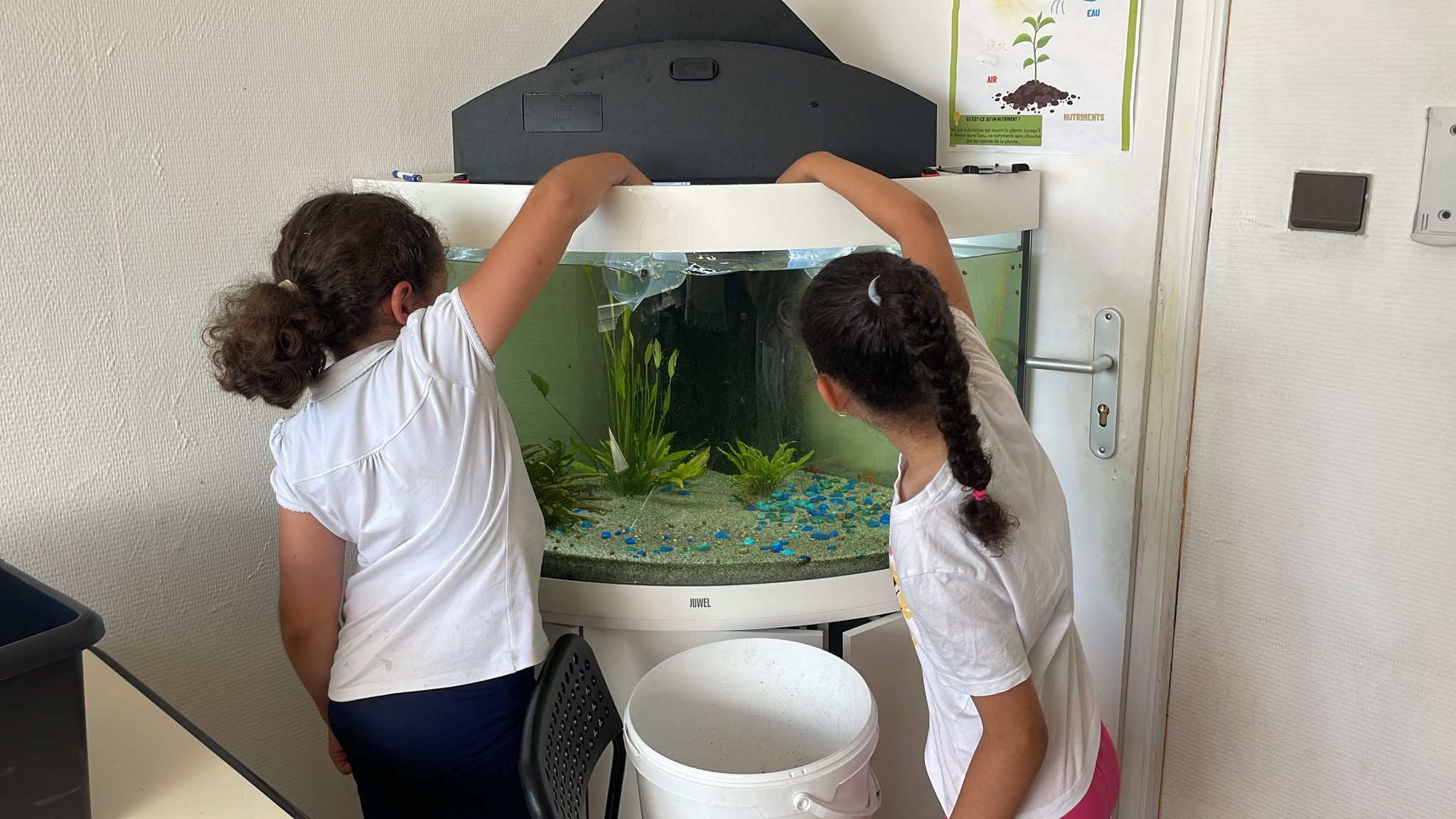
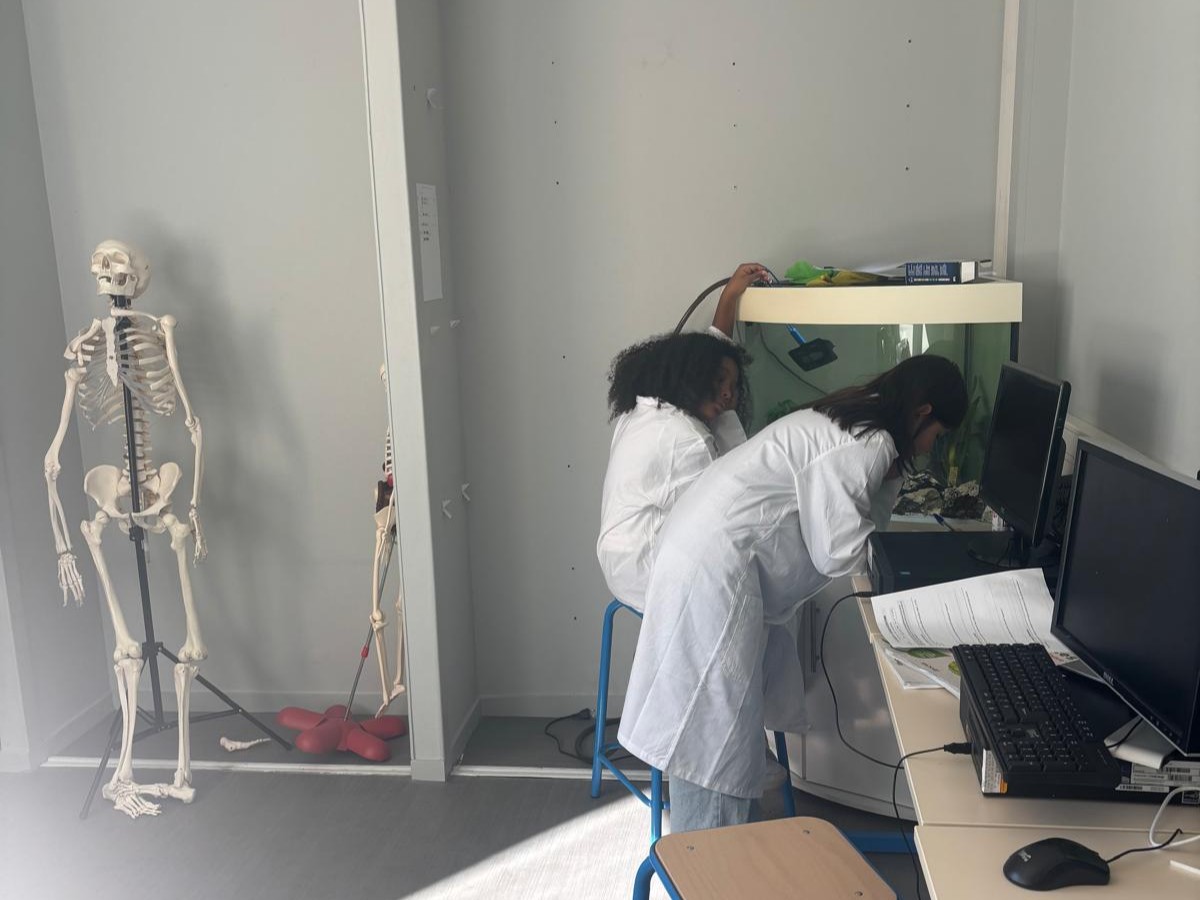
Days follow the Early Years Foundation Stage (EYFS) philosophy, which offers a playful learning atmosphere. Children grow through role play, discovering books, immersive games, and awakening their curiosity by exploring and observing the world. A botanical aquarium and a teaching kitchen are key spaces for observation, curiosity and experimentation. Art also plays a major role, leading to holding a pencil and entering the world of writing.

Outings to the museum, the park, the library, the Lyon aquarium and Cosmocité are special moments for a stimulating learning experience from a very young age. They spark curiosity and the sharing of ideas, in a natural language-learning experience based on shared experiences.
iPads, books, the projector and equipment are available to the teaching team to vary stimulating learning experiences.

Primary School

Primary school

General organisation of teaching

Primary school welcomes children (Grade 1 to 6) in small groups of 20 per class. Lessons start at 8 am and end at 3.30 pm, except on Wednesdays.
The English programme follows the content of the English curriculum, while the French programme follows the requirements of the French curriculum for French speakers and families who wish it, or is taught as an additional language depending on the child's profile.

Discovery subjects are taught through project-based learning, encouraging cross-curricular work around botanical, geographical and historical projects (and more), which can cover themes from the French or English programmes, or follow the calendar of international days (UNESCO).

Project-based learning and personal growth

Projects, workshops and tools are designed to help every child flourish and make the most of their potential, while respecting their individuality.

Inclusion and language level

Progress in English, with no level required to join the school.
The EAL department (English as an Additional Language) is organised to welcome each child whatever their starting level in English, and to help them progress enough to join the English class group.

Secondary School

How learning is organised at FISS international school, Secondary

Secondary pupils follow the English National Curriculum in English, adapted to meet the needs of our international community.
Pupils who wish to can take the option preparing for the exams of the French system.

Key Stage 3, Grades 7 to 9 (French collège, cinquième, quatrième, troisième)

In Grades 7 to 9, students follow a rich range of subjects such as Art, Computing, Drama, English, French (as a mother tongue and as a foreign language), Geography, History, Mathematics, Music, Physical Education, Science, Arabic and Spanish.

Our vision of excellence and success

FISS draws on many educational approaches to offer children an environment that stimulates their potential.

Concrete resources

Early Years and PrimaryYear 5 to Year 9
Concentration and motor skillsBrainballBrainball
LanguagesPlay and learn, dramaInteractive tools, book study, project-based learning through entrepreneurship, drama for literature
Mathematicsabacus and Singapore methods, 3D geometryMathematics and technology, iPads and computers available
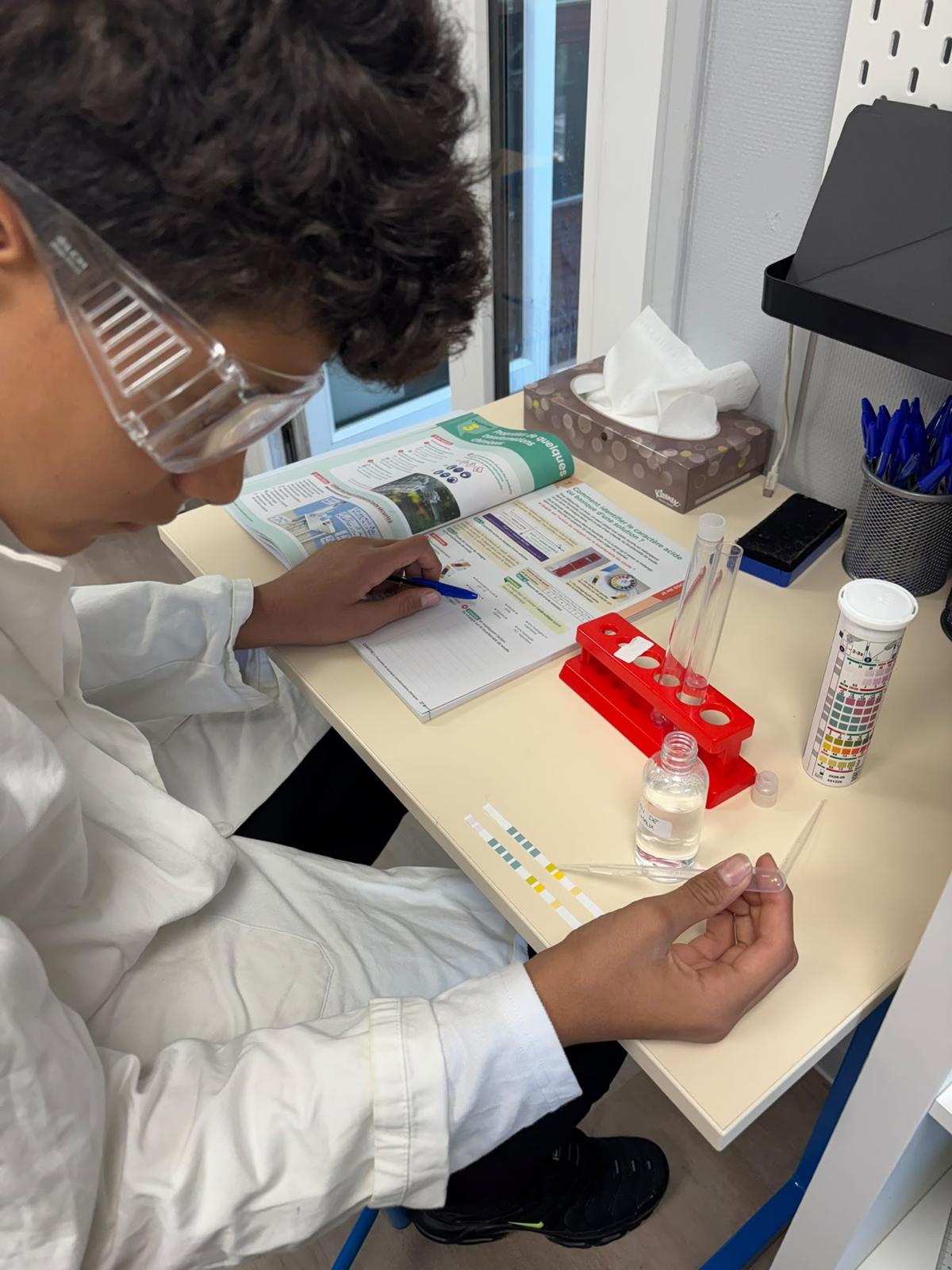
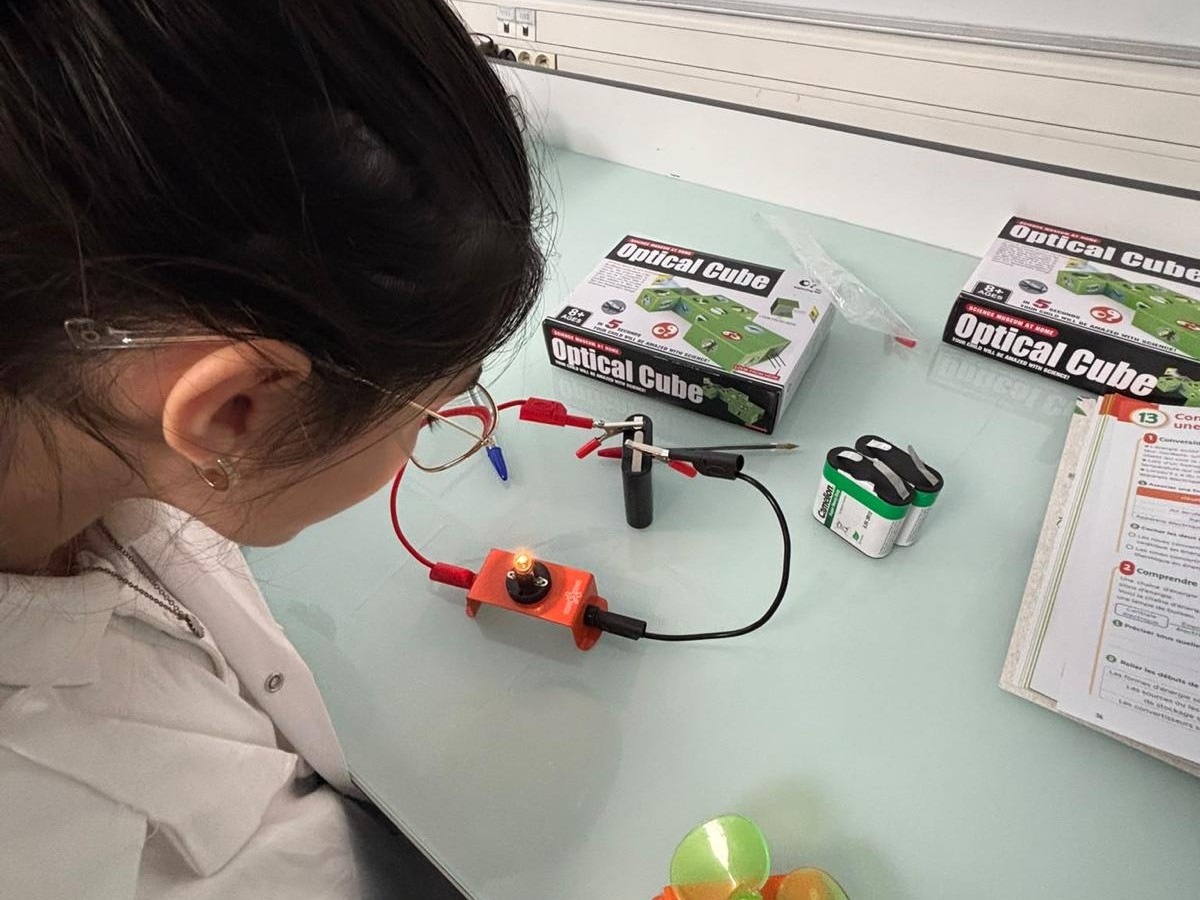
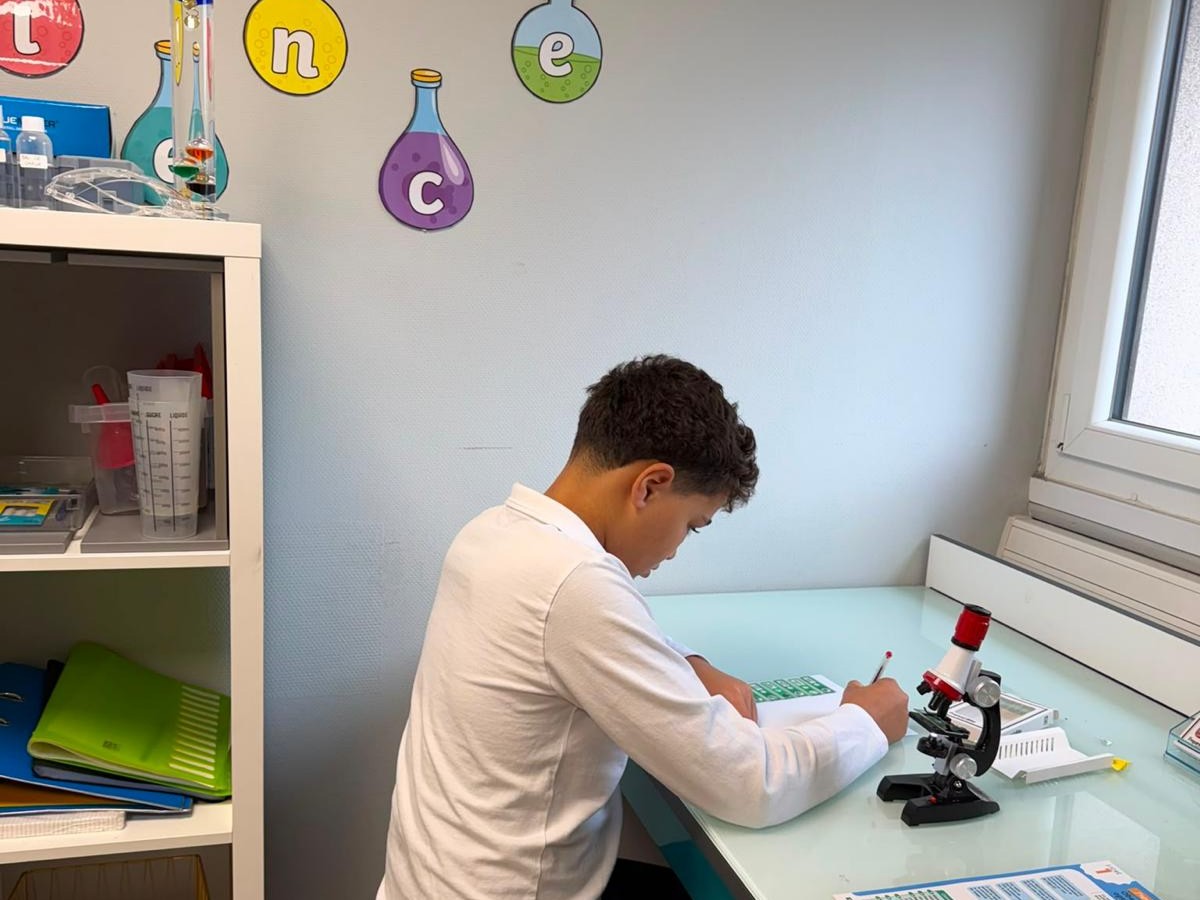
Sciencechemistry in the kitchen, botany in the vegetable garden, study of the aquarium ecosystemhands-on workshops in lab mode
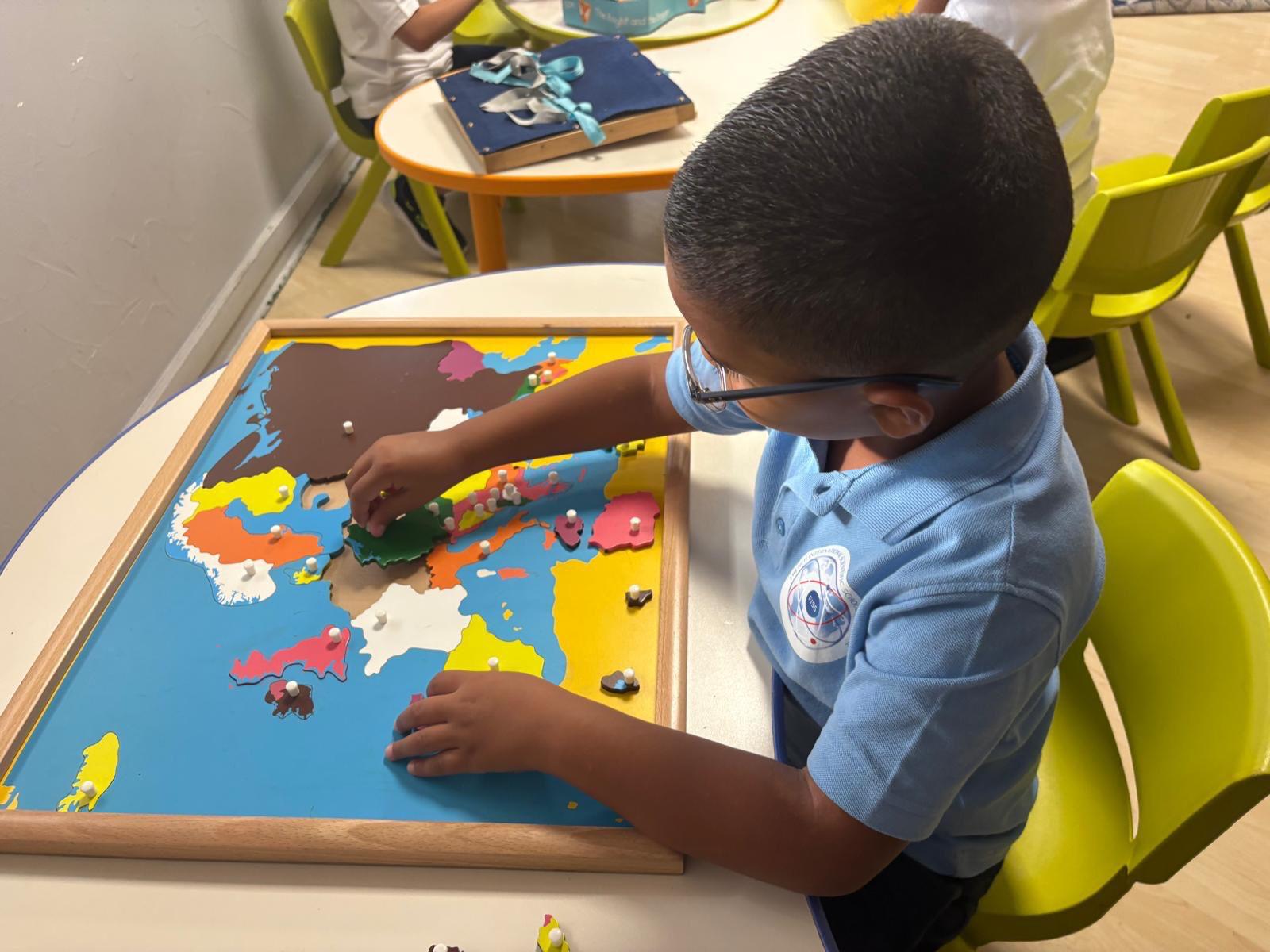
Reading / writingMontessoriMontessori

In the spirit of Howard Gardner's vision, we build a rich experience for learners, with varied tools so that everyone can develop their potential through workshops that draw on the different types of intelligence.
All classrooms are equipped with computer-controlled projectors, and smart tablets are used to work on different skills from a very young age.
Wi-Fi covers all buildings, giving access to school resources and to the Internet for research during digital activities.
FISS has a dedicated information technology room for learning the tools and techniques related to the programmes.

After-school and extracurricular activities

Outings, days out and school trips can be organised, based on the teaching team's projects at the start of the year. Days out throughout the year are an important way to renew children's motivation for learning and to connect it with their view of the world, media library, library, museum, farm, parks... A weekly outing programme is planned for Early Years (nursery), twice a week for primary and monthly for secondary, designed around class projects. In keeping with the school's scientific approach, working with local producers is encouraged, to experience science all around us. Regular outings to Cosmocité and the Fab Lab are also encouraged.

Every year, a school trip of 2 or 3 days in the region is planned at the start of the year, at the end of September. This trip is optional but encouraged.

For the older classes, stays in England or other English-speaking countries may also be offered.

PE lessons take place in various facilities in the city and the region. Tennis at the Eybens park, table tennis on site, golf in Bresson, team sports at the Eybens park, athletics at Bachelard or gymnastics on site.

Assessment

Assessments are carried out to identify and improve each pupil's abilities, skills, levels and talents in every subject.
A series of tests is carried out in class throughout the year. Each time, the teacher tries to tell the class or the pupil the purpose of the work set and how it will be marked. The results of all tests are given to the pupil, and those from official assessments are recorded in the pupil's school file. In the middle of the year (January) and at the end of the third term, parents receive a school report on their child's work in each subject. This report sums up the skills acquired and the goals set for further progress. Pupils' work is marked on the effort made as well as the level reached.

Homework

Homework is an integral part of the programme. Its nature and amount vary according to the pupil's age and needs and the activity set. All pupils are encouraged to read for at least twenty minutes every day. The school sets out four key points for homework to go well.
1. get used to working regularly on their own and without supervision
2. increase the time spent studying
3. allow children to have interests other than those developed at school
4. encourage parents to take part in their child's learning.

Homework is all the more useful when the activities are clearly set out. iPads and the FISS intranet allow good communication between parents and the school. We strive to find the right balance between school life and outside interests, both in the amount and the type of homework given to pupils.

Values and school rules

As a school community, we aim to create an environment that encourages and reinforces good behaviour while promoting positive attitudes. We expect our pupils to behave properly throughout the school and at all times of the day.
This philosophy is closely linked to our school's ethos and to the SEAL programme (Social and Emotional Aspects of Learning). It is vital that the school always takes a consistent approach to behaviour, from every member of the teaching team. This is reinforced by the school's anti-bullying policy and our school rules.

We are a school that cares about everyone's well-being, and we want every member of our team to feel valued and respected. We all have the right to be treated properly and fairly!

This policy is therefore designed to encourage mutually beneficial work from which all members, pupils, staff and parents, can benefit. It aims to promote an environment where everyone feels safe and where the health and well-being of individuals come first. Relationships should be based on respect, honesty, courtesy and consideration.

Uniform

We are all different, yet unique and united.

FISS asks all pupils to wear the uniform, from the age of 4 (Reception class). Beyond its practical advantages, wearing the uniform reinforces the moral and ethical values our school stands for. Whatever our backgrounds and personal stories, we are all different, yet unique and united. The uniform, based on the English model, is suitable and comfortable to wear, and it helps children feel part of the school community and be proud of it. School uniforms can be ordered and bought directly from the school shop, in the FISS buildings. The shop is open every Tuesday and Friday from 8.30 am to 9.30 am. Our dress code is strict and we ask parents to respect it from enrolment. We are convinced that taking pride in one's appearance helps build good self-esteem and a sound awareness of one's personal values. These two qualities are essential for our pupils to grow into confident young people.

Eco-School

Schools taking part in Eco-School can work each year on one of 8 themes, food, biodiversity, waste, water, energy, health, solidarity and climate.

Projects are built around seven key steps that guide participants throughout the school year.

A 7-step method

  • Bring the steering committee together

    Open to the whole school community, the steering committee meets to agree on the direction of the project together. It can bring together teachers, school management, pupils and their parents, elected officials, local authority representatives, local associations, suppliers and service providers, neighbours, and more. The variety of profiles and points of view enriches the project.

  • Carry out the review

    Before taking action, it is important to know the school's starting point on the chosen theme. The review shows what needs improving, so the project can be tailor-made.

  • Define and carry out the action plan

    Based on the review, ideas for improvement and awareness-raising are considered. They set the calendar of actions for the year.

  • Measure and evaluate

    With the support of the teaching teams, pupils regularly check and measure the progress and impact of the actions taken. Making the results visible shows everyone that they can make a difference.

  • Link the project with the subjects taught

    Teachers support the project by making it part of a real teaching approach. The project is thus linked to the curriculum across subjects.

  • Involve the whole school and the community

    The Eco-School project is not the work of a small group, it involves the whole school and is open to local partners who wish to join.

  • Get involved creatively

    Throughout the year, everyone involved is invited to put their creativity to work for the project. At the end of the year, an exhibition of the work helps everyone remember the changes that have taken place.

Parents at FISS

FISS meetings

FISS encourages strong links between parents, teachers and the school.
To keep parents informed of their child's progress, meetings with teachers are offered every term. As well as the class teacher, parents can also meet the teachers of other subjects and discuss the progress made.
Daily contact between parents and teachers is kept through the pupil's digital homework diary (iPad) and informal chats at the school gate. A more formal appointment can be made if needed by calling the school office.

Towards a digital classroom

The school has its own intranet, at fiss-school.fr. Parents follow their child's schooling there and keep in touch with the school, and each child has their own account for lessons, homework and challenges. You receive your login details by e-mail, you log in, then you choose your password. Notifications arrive by e-mail and on your phone, once you install the app.

The parents' association (PTA, Parents Teachers Association)

The PTA provides important services to the school community. It organises social events and school projects, and offers to help new families. The PTA's work is invaluable to the growth and smooth running of our school. Over the last three years, the PTA has raised funds for sports equipment, library books and playground games.

Additional services

  • ClubsFISS offers a number of extracurricular activities in the form of clubs, which complement academic lessons and offer another opportunity to bring out individual talents while supporting the child's personal development.
    Clubs take place after school, from 4 pm to 5.30 pm.
  • For more information on after-school care and/or school mealsjbsgrenoble@gmail.com
    07 49 17 02 38
    jbsgrenoble.fr

A word from the head

A unique school

It is with joy and pride that I will lead FISS... A unique school that brings together interculturality, a variety of languages, ethics and a scientific spirit!

FISS is the wish to see children grow up happy and fulfilled, in an international philosophy, with all the richness that brings.

It also means nurturing their ecological awareness, through eco-friendly projects combined with a concrete knowledge of scientific phenomena, by learning to observe nature, phenomena and reactions.

Growing up at FISS means having the chance to let hearts blossom in kindness and mutual respect, minds in discovery and curiosity, and personalities through the variety of methods and subjects.

FISS is a commitment. To give our pupils the very best, so they hold the keys that open doors to personal, academic and professional experiences around the world!

Curriculum

We offer a variety of educational programmes covering a wide range of subjects.

Curriculum

French and English for all.

A choice of Arabic or Spanish as a third language, from nursery up to the brevet.

Science

Dive into the fascinating world of science through our programme, which encourages curiosity, discovery and experimentation. Pupils are encouraged to ask questions and explore scientific principles through stimulating projects.

Two teaching priorities define our school. The promotion of three languages, a bilingual programme in line with the French and British curricula, and learning in Arabic. Scientific discovery, using innovative alternative methods based on hands-on learning. Our school aims to offer a stimulating and inclusive learning environment, encouraging pupils to explore, experiment and develop their intellectual curiosity. We believe in the balance between gaining solid academic knowledge and developing interpersonal skills, while fostering a caring, individual approach for every pupil.

Mathematics

Our mathematics programme aims to develop pupils' analytical and problem-solving skills. Through interactive teaching methods, pupils gain a deep understanding of mathematical concepts.

Scientific discovery, using innovative alternative methods based on hands-on learning. Find out how our unique teaching approach prepares pupils to succeed in an ever-changing world.

Maths

Singapore and Abacus

Singapore and Abacus workshops

Mathematics workshops using the Singapore method and the Abacus method.

The Singapore method textbooks

The Singapore method mathematics textbook series.

Certified teachers

Our teachers are certified in the Abacus method.

Literature

Explore the world of literature through our programme, which focuses on reading, critical analysis and creative expression. Pupils discover a variety of literary works and develop their own writing style.

Two teaching priorities define our school. The promotion of three languages, a bilingual programme in line with the French and British curricula, and learning in Arabic. Scientific discovery, using innovative alternative methods based on hands-on learning. We are determined to offer an exceptional learning environment for our pupils.

Arts

Art is an essential form of expression. Our art programme encourages pupils to explore their creativity.

Two teaching priorities define our school. The promotion of three languages, a bilingual programme in line with the French and British curricula, and learning in Arabic. Scientific discovery, using innovative alternative methods based on hands-on learning.

Our dedicated teaching team is committed to offering a stimulating learning environment where every pupil is encouraged to reach their full potential. We believe in academic excellence, personal development and our pupils' social well-being.

At FISS, we strive to provide a quality education, with a focus on the balance between academic, artistic and sporting subjects. We are proud of our holistic approach to learning, which aims to shape competent, curious and ethical individuals.

If you would like to know more about our educational programme, do not hesitate to contact our team or visit our school.

PE

Physical education and sport is a key part of our programme. We encourage pupils to adopt a healthy and active lifestyle through a variety of sports, with an emphasis on teamwork and leadership.

A fitness coach also comes half a day a week for PE lessons, which may be tennis at the Eybens park, table tennis on site, golf in Bresson, team sports at the Eybens park, athletics at Bachelard or gymnastics on site.

Our programmes

French programme

The French programme follows the common core of knowledge, skills and culture set by the French Ministry of Education.
Teaching tools are used to give children concrete learning, especially in the younger classes up to CM1 (Year 4), through methods in which the teachers are certified, especially in language and mathematics.

Cambridge English language programme

Art, sport and technology lessons are taught in English. For language, the programmes follow the British curricula, and an application for Cobis accreditation is planned during 2024 - 2025. Materials from the Cambridge collection are used so that parents can follow their child's learning.

Arabic language and culture programme

The Arabic language and culture programme takes place in 4 sessions a week, to develop the 4 skills of reading, writing, comprehension and written and oral production.

Gallery

Our collections

Bilingual programme / English

English is taught through immersion, mainly in art, sport and understanding the world, while one period a week is devoted to reading books and to language work with the Cambridge collection.

Trilingual programme / Arabic

The Arabic language programme is spread over four periods, one a day. This time is balanced between reading, writing and speaking, with the Dandana collection, a fun resource for speaking and conjugation.

Like our programme? Contact us to find out more.

Contact →

International days

International days are celebrated with our traditional events

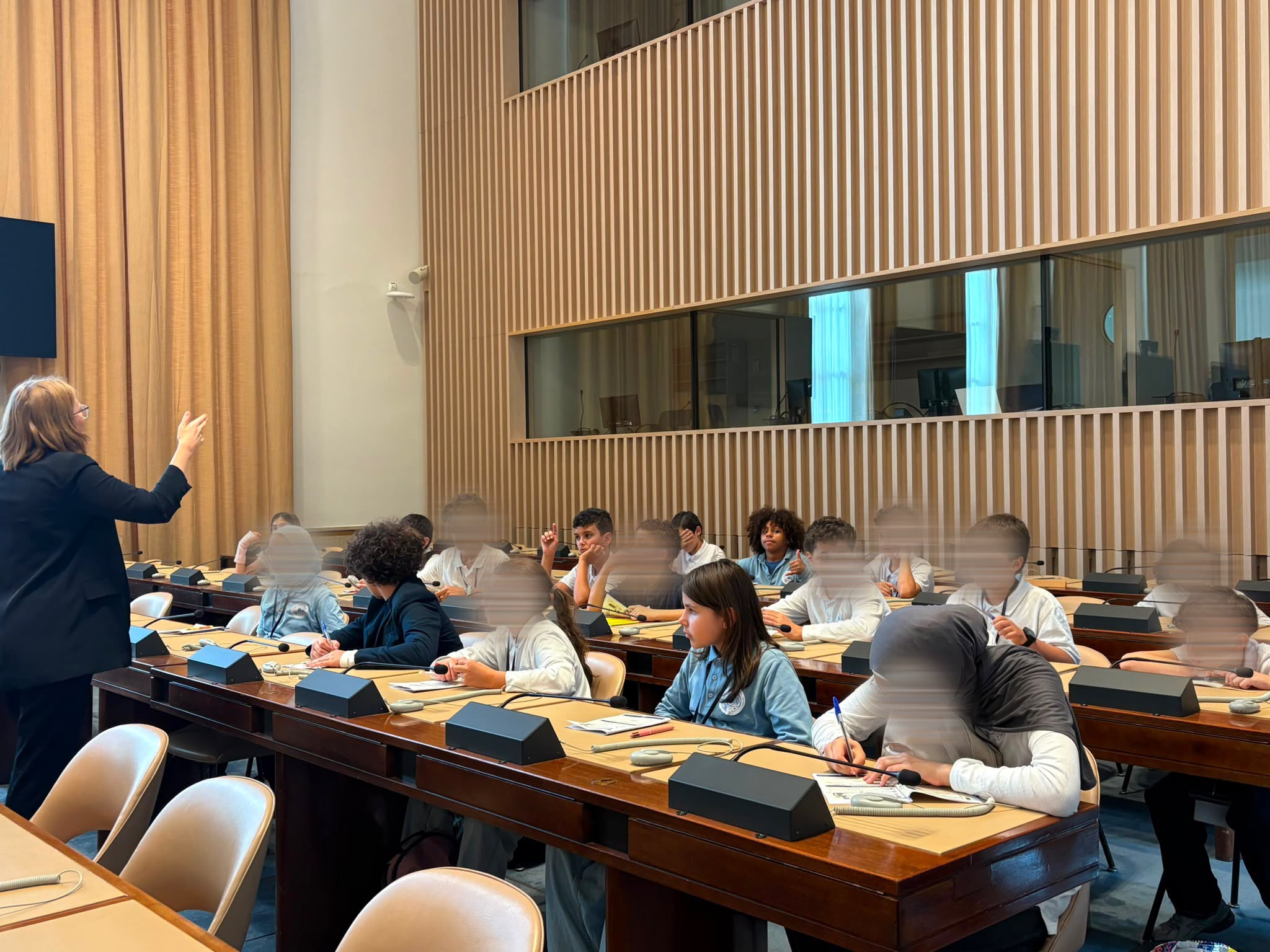
International Day of Peace

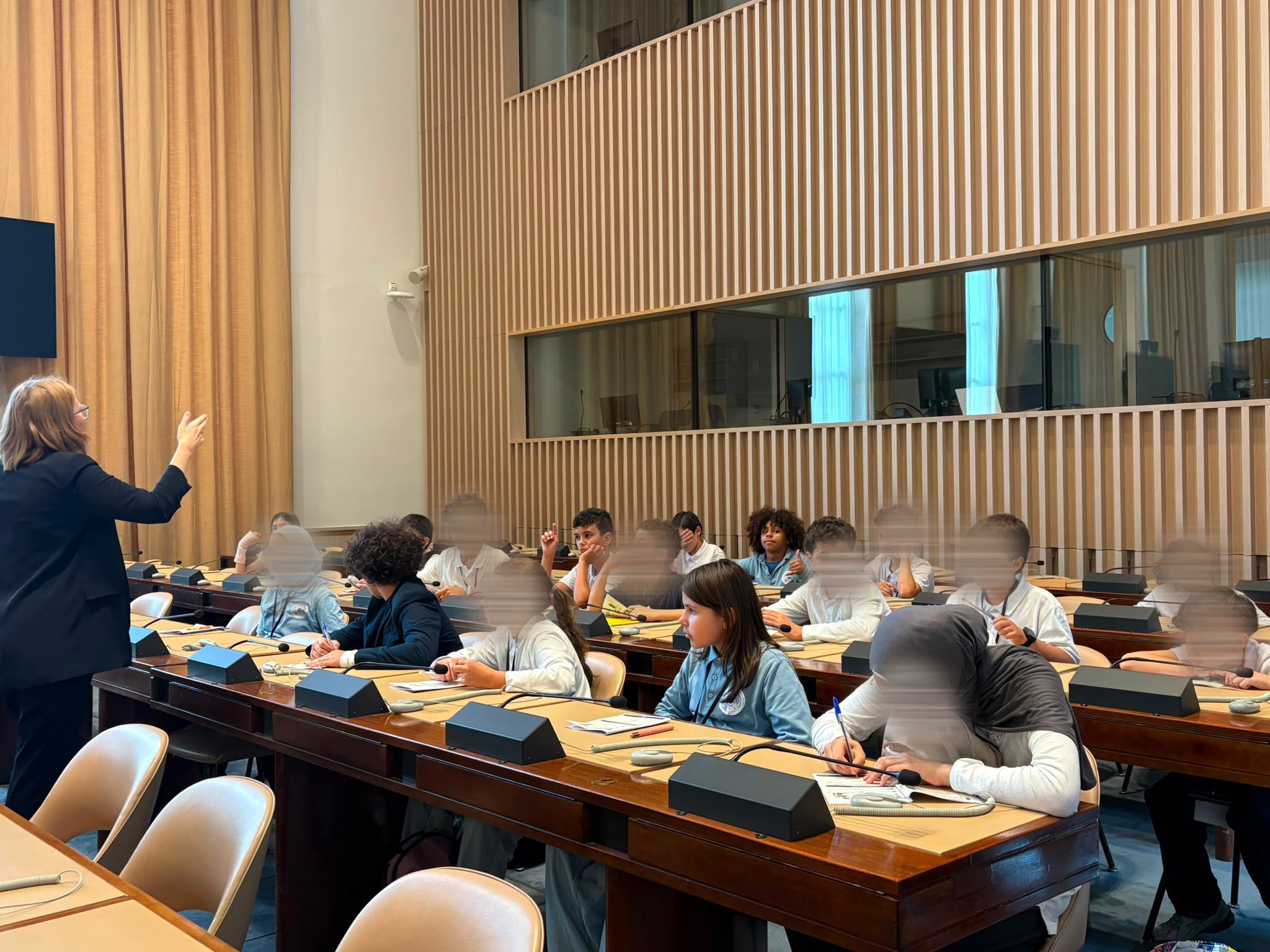
The International Day of Peace at the UN

The UN year by year →
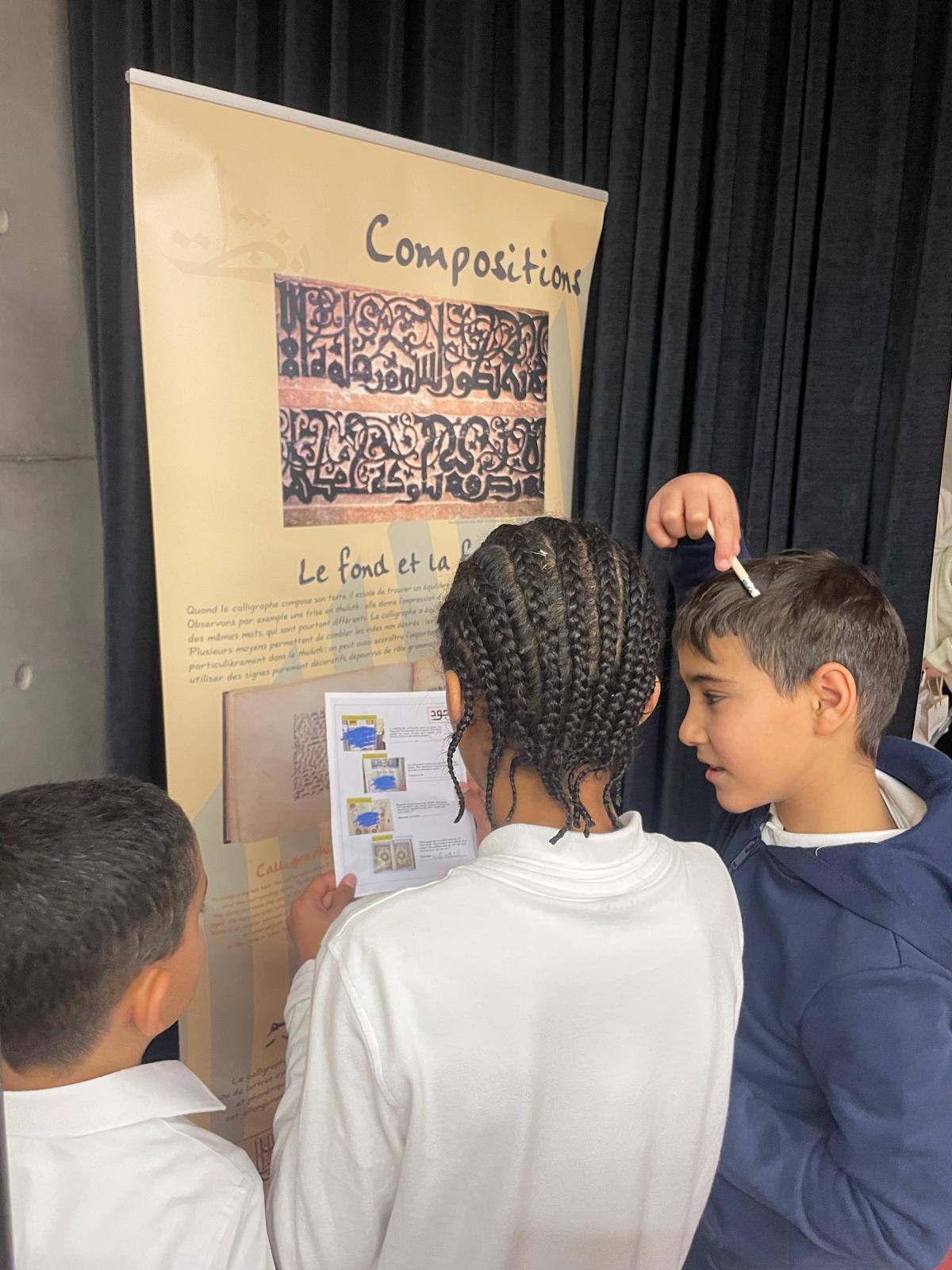
World Arabic Language Day

The craft market

World Poetry Day

The poetry festival

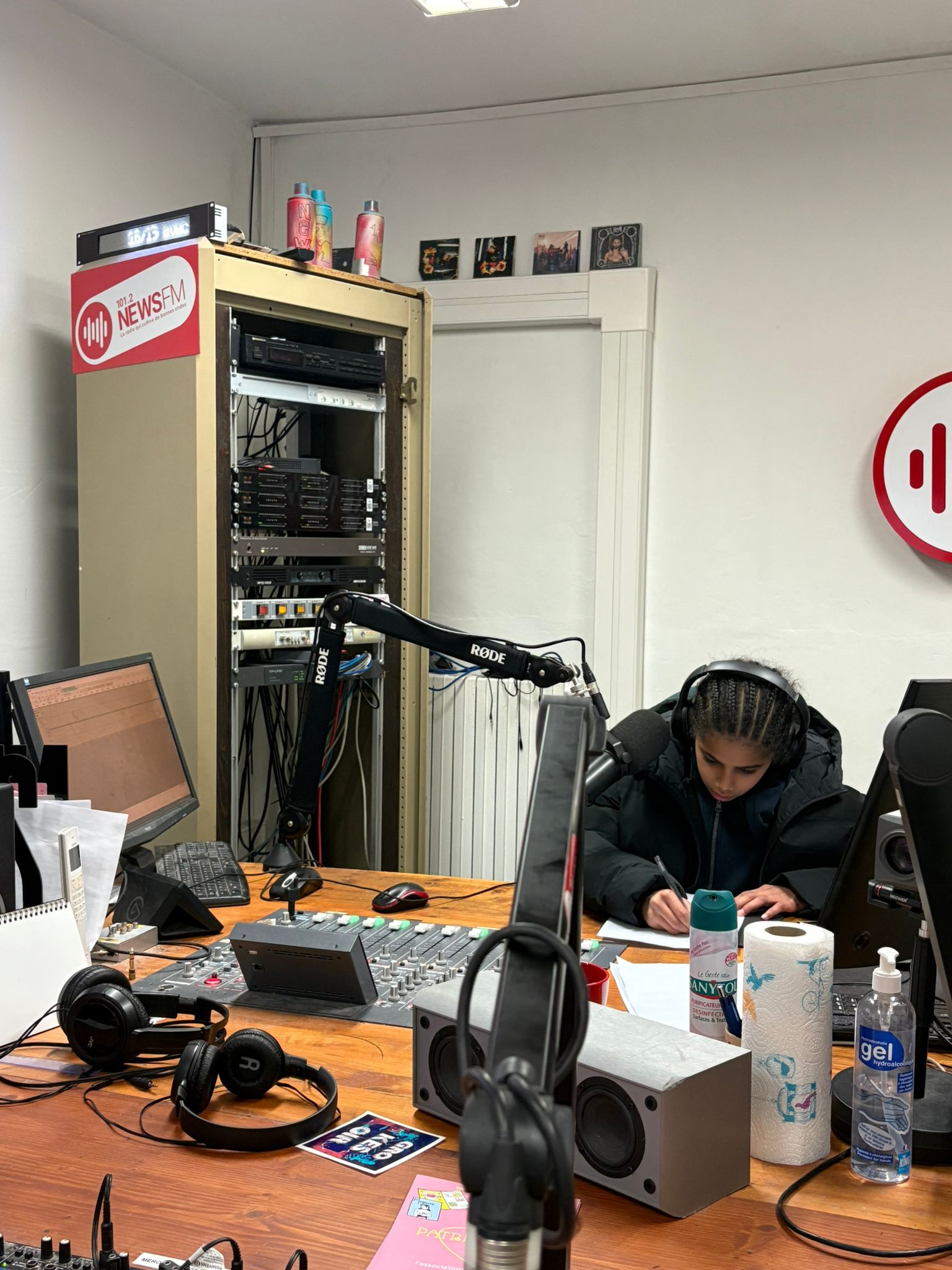
World Radio Day

The News FM outing

The News FM website →
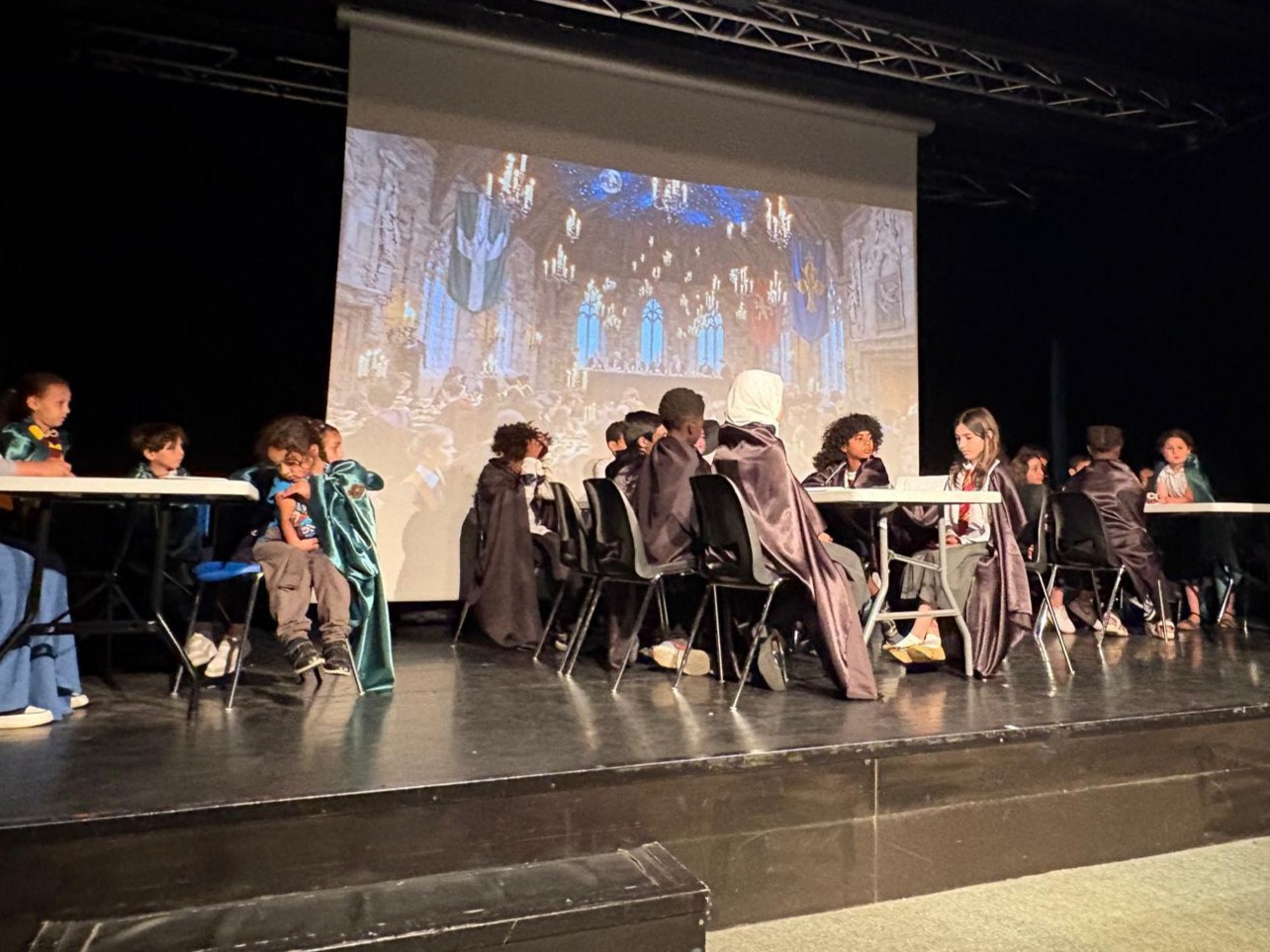
English Language Day

The Harry Potter show

Photos and videos →
World Teachers' Day

Letters to teachers

International Day of Peace

The UN, year by year

2025-2026

International Day of Peace

The International Day of Peace at the UN

FISS international school celebrates the International Day of Peace.

Parents at FISS

Parents' assemblies

3 times a year.

Science

Science comes to life, full scale

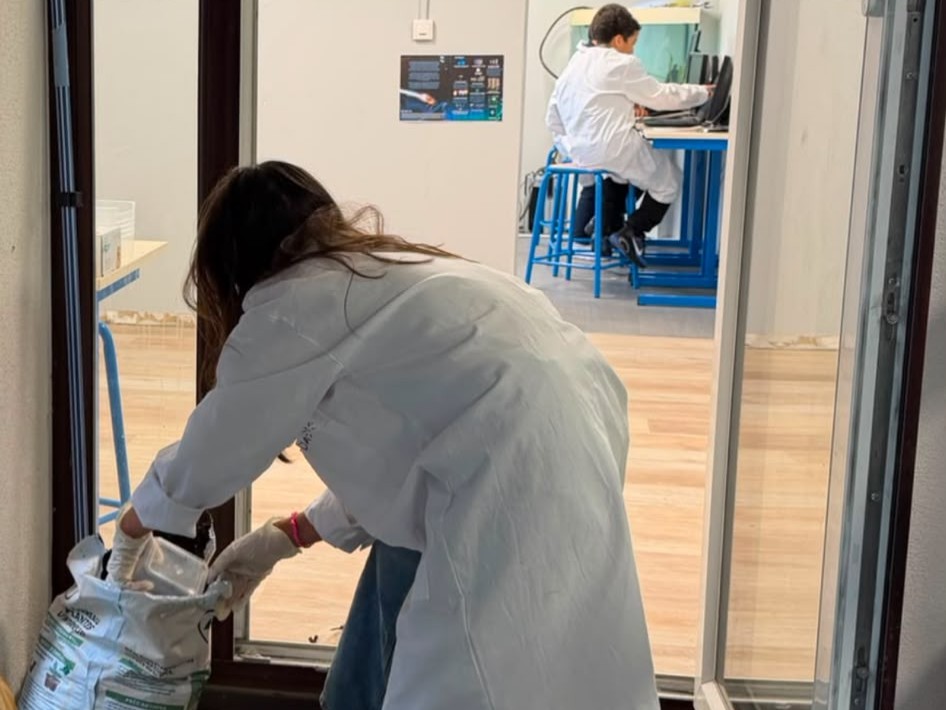
With the secondary lab and the primary science activities.

The secondary lab

Science, hands-on workshops in lab mode.

Primary science activities

Science, chemistry in the kitchen, botany in the vegetable garden, study of the aquarium ecosystem.

The secondary lab

Photo 1
Photo 2
Photo 3
Photo 4

Admission

Admission test

Find out about the admission test sessions for the 2026-2027 school year.

Admission test

Available sessions for admission to the 2026-2027 school year will be published soon.

LevelHow it works
NurseryA 30-minute individual meeting with the parents and the child, to get to know the child, their background and their profile.
PrimaryA one-hour individual meeting made up of
- 45 minutes of testing
- 15 minutes of interview
Lower secondaryA one-hour individual meeting made up of
- 15 minutes of interview on language skills
- 15 minutes on the child's motivation to join our school and their understanding of the project
- 30 minutes of psychometric testing

The school

Frequently asked questions

  • Is the school open to everyone?

    Yes, the school is open to everyone, after a meeting with the parents and the child, and a review of the application, within the limit of available places.

  • Is the lower secondary school currently open?

    FISS offers an international education from nursery to Year 9.

  • Will children have access to all the knowledge of the French curriculum?

    All our programmes comply with the common core of knowledge, skills and culture, in accordance with decree no. 2015-372 of 31 March 2015.

A question about admission?

Your enquiry is about
Your child

For parents

Parents at FISS

Welcome to the FISS parents' platform. Here you will find important information and resources to help you take a full part in your child's school life.

School news

School news

Stay up to date with the latest news and events at FISS. We will keep you informed of activities, special projects and important announcements.

Towards a digital classroom

The FISS intranet

The school has its own intranet, at fiss-school.fr. Parents follow their child's schooling there and keep in touch with the school, and each child has their own account for lessons, homework and challenges. You receive your login details by e-mail, you log in, then you choose your password. Notifications arrive by e-mail and on your phone, once you install the app.

Parent area

What you will find in the intranet

  • Follow your child's schoolingTimetable, homework diary and homework, e-learning, marks and reports, portfolio of your child's work.
  • Communicate with the schoolMessages with teachers, parent-teacher appointments, home-school diary, information in case of an incident.
  • Everyday servicesMenus and canteen booking, uniform shop, after-school clubs, school outings, certificates to download.
  • School lifeEvent photos, newsletters, the year's calendar and international days.

Child area

Your child's account

  • My lessons

    Their timetable, homework with online quizzes, step-by-step e-learning courses, their portfolio and the books borrowed from the library.

  • My World

    A map to explore island by island, with missions to complete, points earned for their House and the Star of the Week.

  • School life

    The home-school diary, photos, the Friday assembly and the class's shared life, aquarium, vegetable garden and everyone's jobs.

Parents at FISS

FISS meetings

FISS encourages strong links between parents, teachers and the school.
To keep parents informed of their child's progress, meetings with teachers are offered every term. As well as the class teacher, parents can also meet the teachers of other subjects and discuss the progress made.
Daily contact between parents and teachers is kept through the pupil's digital homework diary (iPad) and informal chats at the school gate. A more formal appointment can be made if needed by calling the school office.

The parents' association (PTA, Parents Teachers Association)

The PTA provides important services to the school community. It organises social events and school projects, and offers to help new families. The PTA's work is invaluable to the growth and smooth running of our school. Over the last three years, the PTA has raised funds for sports equipment, library books and playground games.

Additional services

  • ClubsFISS offers a number of extracurricular activities in the form of clubs, which complement academic lessons and offer another opportunity to bring out individual talents while supporting the child's personal development.
    Clubs take place after school, from 4 pm to 5.30 pm.
  • For more information on after-school care and/or school mealsjbsgrenoble@gmail.com
    07 49 17 02 38
    jbsgrenoble.fr

Uniform

We are all different, yet unique and united.

FISS asks all pupils to wear the uniform, from the age of 4 (Reception class). Beyond its practical advantages, wearing the uniform reinforces the moral and ethical values our school stands for. Whatever our backgrounds and personal stories, we are all different, yet unique and united. The uniform, based on the English model, is suitable and comfortable to wear, and it helps children feel part of the school community and be proud of it. School uniforms can be ordered and bought directly from the school shop, in the FISS buildings. The shop is open every Tuesday and Friday from 8.30 am to 9.30 am. Our dress code is strict and we ask parents to respect it from enrolment. We are convinced that taking pride in one's appearance helps build good self-esteem and a sound awareness of one's personal values. These two qualities are essential for our pupils to grow into confident young people.

Summer Camp

Learn in the morning, have fun in the afternoon!

4 sessions, July and August 2026
12 places, Primary and Lower secondary
12 places, Nursery
Optional fun programme from 3 pm to 6 pm available

2026 sessions

Choose your week

SessionDates
Session 1, July6 → 10 July, Monday to Friday
Session 2, July13 → 17 July, Monday to Friday
Session 3, August17 → 21 August, Monday to Friday
Session 4, August24 → 28 August, Monday to Friday

12 places available.
Monday to Thursday, full programme morning and afternoon.
On Friday, a special outing to reward your efforts!

Summer Camp Lower secondary & Primary

Timetables

TimeProgramme
9.00 to 9.45Reading, A book about…
9.45 to 10.30Listen & Understand, Speak about yourself
10.30 to 11.15Vocabulary of the day
11.15 to 11.30Break & have fun!
11.30 to 12.15Grammar, Sentences & Writing
12.15 to 13.30Lunch break
13.30 to 14.45Maths
14.45 to 15.15Have a break!
15.15 to 16.00Scratch

Fun programme, extended afternoon. Your child can stay for a 100% fun afternoon! 3 pm to 6 pm

Nursery, Bootcamp ages 3 to 6

TimeProgramme
8.45 to 9.00Welcome & English
9.00 to 9.45Abacus
9.45 to 10.15Break, have fun!
10.15 to 11.00Singapore method
11.00 to 11.45I read with Montessori
11.45 to 12.30Lunch
12.30 to 14.30Rest & quiet time
14.30 to 16.00Snack, games & gradual pick-up

Fun programme, extended afternoon. Your child can stay for a 100% fun afternoon! 3 pm to 6 pm

Every Friday

Surprise outing, You earned it!

But remember… speak only in English!

Registration open, 12 places. Join us!

Register for the Summer Camp →

Our labels and accreditations

Eco - Schools label

Schools taking part in Eco-School can work each year on one of 8 themes, food, biodiversity, waste, water, energy, health, solidarity and climate.

A 7-step method

Projects are built around seven key steps that guide participants throughout the school year

  • Bring the steering committee together

    Open to the whole school community, the steering committee meets to agree on the direction of the project together. It can bring together teachers, school management, pupils and their parents, elected officials, local authority representatives, local associations, suppliers and service providers, neighbours, and more. The variety of profiles and points of view enriches the project.

  • Carry out the review

    Before taking action, it is important to know the school's starting point on the chosen theme. The review shows what needs improving, so the project can be tailor-made.

  • Define and carry out the action plan

    Based on the review, ideas for improvement and awareness-raising are considered. They set the calendar of actions for the year.

  • Measure and evaluate

    With the support of the teaching teams, pupils regularly check and measure the progress and impact of the actions taken. Making the results visible shows everyone that they can make a difference.

  • Link the project with the subjects taught

    Teachers support the project by making it part of a real teaching approach. The project is thus linked to the curriculum across subjects.

  • Involve the whole school and the community

    The Eco-School project is not the work of a small group, it involves the whole school and is open to local partners who wish to join.

  • Get involved creatively

    Throughout the year, everyone involved is invited to put their creativity to work for the project. At the end of the year, an exhibition of the work helps everyone remember the changes that have taken place.

Early childhood, schooling, training

The International Campus

Baby Nahl, FISS and TDMR, the three complementary hubs of a single ecosystem, covering early childhood, schooling from nursery to Year 9, and training.

Each organisation keeps its own name, identity and specific features, while benefiting from the visibility and consistency of belonging to the International Campus.

The three hubs

A complementary pathway

The early childhood hub, Baby Nahl, international nursery. The school hub, FISS, from nursery to Year 9. The training hub, TDMR, training centre.

Governance and management

Our team

Founder of the International Campus

She carries the founding vision of the International Campus and the development of this unifying project bringing together the three hubs.

Director of the Baby Nahl international nursery

She manages the early childhood hub, represented by the Baby Nahl international nursery.

Head of the FISS school hub

She manages the school hub, which supports pupils from nursery to Year 9.

Coordinator of the TDMR training hub

She coordinates the training hub and contributes to organising and developing TDMR's activities.

Families

Canteen and after-school care

The canteen with our caterer Les pois sont rouges, and after-school care with our partner JBS.

Our caterer

The canteen

This year, children registered for the canteen at the French International Scientific School (FISS) will enjoy a top-quality catering service.

We have chosen to work with Les pois sont rouges, a local, eco-friendly caterer.

Your children's meals will now be prepared with organic ingredients (AB label), cooked locally and delivered hot every day in insulated boxes, ready to serve.

Meals and childcare

  • Meal serviceThere are 3 separate canteen sittings, at 11.45, 12.15 and 12.45. Children must bring their own lunch, unless they are registered for the hot meal service, prepared by our caterer Les pois sont rouges. A light snack can also be brought for break times. Healthy food is preferred. Fizzy drinks and chewing gum are not allowed.
  • ChildcareFISS provides childcare until 6 pm.
    We are not able to provide childcare for pupils arriving before 8 am. Unless the school has been told in advance, parents must pick up their children within 10 minutes of the end of lessons. If pupils are registered for an extracurricular activity ending at 4.45 pm, parents must pick them up before 5 pm. For obvious safety reasons, pupils will only be handed over to their parents or guardians, unless a written note has been given to the school by the morning of the same day at the latest.

Our partner JBS

After-school care and After-School clubs

The JBS leisure centre (ACM) welcomes, on the same site, children registered for childcare during the lunch break and in the evening from 3.30 pm to 6 pm. Registration is done directly with the relevant office, 07 49 17 02 38, jbsgrenoble@gmail.com.

The JBS ACM leisure centre lets children and young people sign up for fun clubs such as sport, creative art, board games, chess (and more), in one of the three languages offered by the school.

Our partners

Useful links

Our partner JBS, for after-school care

Childcare, lunch break and After-School clubs.
07 49 17 02 38
jbsgrenoble@gmail.com

The JBS website →

Our caterer, Les pois sont rouges

Local, eco-friendly caterer, organic meals delivered hot every day.

The Les pois sont rouges website →

Contact

Welcome to FISS

FISS is an international school offering a bilingual programme in line with the French and British curricula, with a strong focus on learning Arabic. We are proud to promote a stimulating and diverse learning environment, centred on scientific discovery and language learning.

Call us07 76 64 69 04
E-mail usfschool.fiss@gmail.com
Nursery and primary6 rue Voltaire, 38320 Eybens
Lower secondary34 ter avenue Marie Reynoard, 38100 Grenoble
Opening hoursOur offices are open during term time from 7.30 am to 4 pm
During school holidaysOur offices are open on Mondays and Fridays from 2 pm to 7 pm

Let's stay in touch

Your enquiry is about

Legal notice

Mis à jour le 05/10/2026

1. Éditeur du site

Le site ecole-internationale-fiss.fr est édité par École internationale FISS, Association loi 1901.
Contact fschool.fiss@gmail.com

2. Directeur de la publication

Le directeur de la publication est le président ou la présidente de l'association.

3. Hébergement

Le site est hébergé en France par O2SWITCH, SARL au capital de 100 000 euros, RCS Clermont-Ferrand 510 909 807.
222-224 boulevard Gustave Flaubert, 63000 Clermont-Ferrand
Téléphone 04 44 44 60 40

4. Propriété intellectuelle

Les textes, photos, logos, vidéos et supports présentés sur ce site appartiennent à École internationale FISS ou sont utilisés avec l'accord de leurs auteurs. Toute reproduction, même partielle, sans autorisation écrite préalable est interdite.

Les photos des enfants sont publiées uniquement avec l'autorisation de leurs parents. Pour demander le retrait d'une photo, écrivez-nous à fschool.fiss@gmail.com.

5. Liens et responsabilité

Nous veillons à l'exactitude des informations publiées, sans pouvoir garantir qu'elles soient toujours complètes ou à jour. Les liens vers d'autres sites sont fournis pour votre information ; nous ne sommes pas responsables de leur contenu.

6. Données personnelles

La manière dont nous traitons vos données et vos droits sont expliqués dans notre politique de confidentialité, accessible en bas de chaque page.

Terms and conditions of sale

Mis à jour le 05/10/2026

1. Objet

Ces conditions générales de vente s'appliquent à toutes les inscriptions, adhésions, cours, stages, sorties et prestations proposés par École internationale FISS et réglés sur ce site ou auprès de l'association. En validant une inscription, vous déclarez les avoir lues et les accepter.

2. Inscription

L'inscription se fait au moyen du formulaire en ligne, ou sur place auprès de l'association. Vous recevez aussitôt un e-mail récapitulatif.

L'inscription devient définitive lorsque l'association la confirme par e-mail. Lorsque toutes les places sont prises, la demande est placée sur liste d'attente et vous êtes prévenu dès qu'une place se libère.

Vous vous engagez à fournir des informations exactes, en particulier les coordonnées et les informations utiles à la sécurité des enfants.

3. Prix

Les prix sont indiqués en euros, toutes taxes comprises, sur la page d'inscription. Le montant total est rappelé avant l'envoi du formulaire et dans l'e-mail de confirmation. L'adhésion annuelle à l'association, lorsqu'elle est demandée, est indiquée séparément.

4. Paiement

Selon ce que propose chaque formulaire, vous pouvez régler par carte bancaire, par prélèvement SEPA, par virement, par chèque ou en espèces.

Le paiement en plusieurs fois, jusqu'à 10 fois, est sans frais et sans intérêt. L'échéancier, avec la date et le montant de chaque part, figure dans l'e-mail de confirmation.

Carte bancaire. Votre carte est enregistrée sur la page sécurisée de notre prestataire de paiement Stripe, puis débitée à la date de chaque échéance. Nous ne recevons jamais votre numéro de carte. Un reçu vous est envoyé à chaque paiement.

Prélèvement SEPA. En acceptant le mandat dans le formulaire, vous autorisez l'association à prélever votre compte aux dates de l'échéancier. Vous pouvez demander le remboursement d'un prélèvement à votre banque dans les 8 semaines qui suivent le débit.

En cas de retard de paiement, nous vous adressons des rappels par e-mail. Après plusieurs rappels sans réponse, l'association peut suspendre la participation aux activités. En cas de difficulté, contactez-nous, nous chercherons une solution ensemble.

5. Droit de rétractation

Pour une inscription faite à distance, vous disposez d'un délai de 14 jours à compter de la confirmation de l'inscription pour vous rétracter, sans avoir à vous justifier. Il suffit de nous l'écrire à fschool.fiss@gmail.com.

Si vous avez demandé que les cours commencent avant la fin de ce délai, le montant correspondant aux séances déjà suivies reste dû.

Le remboursement intervient au plus tard 14 jours après votre demande, par le même moyen de paiement que celui utilisé.

6. Annulation et remboursement

Après le délai de rétractation, l'inscription est due pour la période choisie. Un remboursement au prorata des séances restantes peut être accordé pour un motif sérieux, comme un déménagement ou une raison médicale, sur justificatif.

Si l'association annule une activité, les séances non assurées sont remplacées, rattrapées ou remboursées.

7. Déroulement des cours

Les cours ont lieu en présentiel ou en ligne, selon la formule choisie. Les horaires et le lieu, ou le lien de la classe en ligne, sont communiqués à l'inscription.

Cours en ligne. Le lien de la classe est personnel et ne doit pas être partagé. L'enregistrement ou la diffusion des cours, des images ou de la voix des participants est interdit sans l'accord de l'association. Pendant un cours en ligne, l'enfant reste sous la responsabilité de ses parents.

Une séance manquée par l'élève n'est pas remboursée. Une séance annulée par l'association est remplacée ou rattrapée.

Chacun s'engage à respecter les enseignants, les autres élèves et le règlement intérieur de l'association.

8. Données personnelles

Les informations recueillies lors de l'inscription servent à la gestion des inscriptions, au suivi des élèves et aux paiements. Elles sont détaillées dans notre politique de confidentialité, accessible en bas de chaque page.

9. Réclamations et médiation

Pour toute question ou réclamation, écrivez-nous à fschool.fiss@gmail.com. Nous vous répondons dans les meilleurs délais.

En cas de désaccord persistant, vous pouvez recourir gratuitement à un médiateur de la consommation.

10. Droit applicable

Ces conditions sont soumises au droit français. À défaut d'accord amiable, le litige est porté devant les tribunaux compétents.
Privacy policy

Mis à jour le 05/10/2026

1. Qui est responsable de vos données

École internationale FISS, Association loi 1901, est responsable des données collectées sur ce site et dans ses espaces en ligne.
Contact fschool.fiss@gmail.com

2. Les données que nous collectons

Formulaire de contact. Votre nom, votre adresse e-mail et votre message.

Inscriptions. Les nom, prénom, adresse e-mail, téléphone et, si elle est demandée, l'adresse postale du responsable. Pour chaque personne inscrite, le nom, le prénom, la date de naissance, la classe et les réponses au formulaire. Les informations de santé ou les autorisations, comme le droit à l'image ou la sortie seul, uniquement si vous choisissez de nous les donner.

Paiements. L'échéancier et les règlements. Pour un prélèvement SEPA, le titulaire et l'IBAN du compte. Votre numéro de carte bancaire n'est jamais reçu ni conservé par l'association ; il est traité par notre prestataire de paiement Stripe.

Suivi des élèves. La présence aux cours et la progression, notées par les enseignants.

3. Pourquoi nous les utilisons

Pour gérer les inscriptions et les adhésions, organiser les cours et les activités, assurer la sécurité des enfants, suivre la progression des élèves, encaisser les paiements et envoyer les reçus et les rappels, répondre à vos messages et vous informer de la vie de l'association.

Ces traitements reposent sur l'exécution de votre inscription, sur nos obligations légales, notamment comptables, et sur votre consentement pour les informations facultatives comme le droit à l'image.

4. Qui peut y accéder

Seuls les membres habilités de l'association y ont accès, et chaque enseignant ne voit que ses propres élèves.

Nos prestataires techniques interviennent uniquement pour nous rendre leur service. O2SWITCH héberge le site en France, Stripe traite les paiements par carte, et notre banque les prélèvements.

Vos données ne sont jamais vendues ni utilisées à des fins publicitaires.

5. Combien de temps nous les gardons

Les données d'inscription sont conservées pendant toute l'adhésion, puis 3 ans après la dernière inscription. Les pièces comptables, comme les paiements et les reçus, sont conservées 10 ans, comme la loi l'exige. Les informations de santé sont supprimées à la fin de l'année scolaire. Les messages de contact sont conservés 3 ans au plus.

6. Sécurité

Le site est protégé par une connexion chiffrée. Les espaces de gestion sont réservés aux personnes autorisées, avec un identifiant personnel. Les fichiers joints aux formulaires ne sont jamais accessibles publiquement.

7. Vos droits

Vous pouvez à tout moment accéder à vos données, les faire corriger ou effacer, vous opposer à leur utilisation, en demander la limitation ou une copie, et retirer votre consentement pour les informations facultatives. Écrivez-nous à fschool.fiss@gmail.com.

Si vous estimez que vos droits ne sont pas respectés, vous pouvez adresser une réclamation à la CNIL sur le site www.cnil.fr.

8. Enfants

Les données des enfants nous sont confiées par leurs parents ou responsables légaux, qui exercent leurs droits pour eux.

9. Cookies

Ce site n'utilise ni cookies publicitaires ni outil de mesure d'audience. Un cookie technique peut être utilisé le temps d'une inscription, pour que le formulaire fonctionne. Les polices de caractères du site sont chargées depuis les serveurs de Google, qui reçoivent à cette occasion l'adresse IP de votre appareil.